You Qualify for These Incentives!

ecgce
Sapiens: A Graphic History TP #4
Sapiens: A Graphic History TP #4
Couldn't load pickup availability
Pre-sale — final order cutoff week of Oct 5. Ships when released.
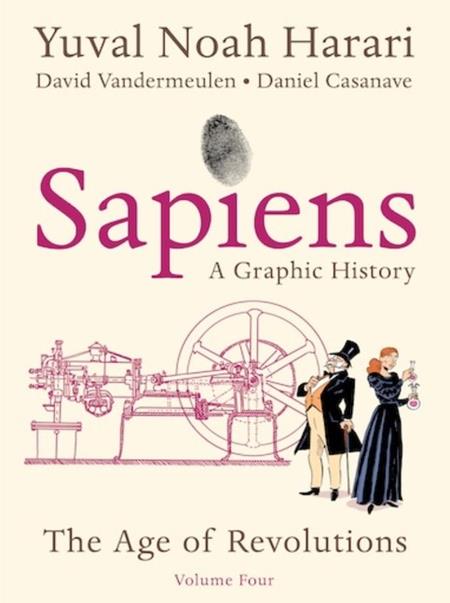
Until 1500 AD, Homo sapiens were mostly satisfied with the medical, military, and economic powers they had achieved, preferring to spend their resources on preserving the existing social order, not breaking new ground. So, how did we go from medieval scrolls to modern computers? From the Santa Maria to the atomic bomb? From the earth’s surface to the moon? Turns out the key to jumpstarting the Scientific Revolution was one major discovery: ignorance. Admitting our ignorance led the pursuit of new knowledge, kicking off an endless cycle spurred by science, politics, and economics—a feedback loop that has brought us to the brink of a new sort of intelligence that might just supersede humanity as we know it.Volume 4 maps onto Part 4 of the original Sapiens book, and examines how a shift toward scientific thinking transformed human history starting in the 16th century and continuing into the future. This is when science overtook religion and philosophy as the dominant way of understanding the world—fueling imperialism, the Industrial Revolution, and the unraveling of old social structures. This volume also looks ahead, asking how breakthroughs like artificial intelligence might transform human consciousness and the future of our species.This final installment in the Sapiens: A Graphic History series delivers on the previous three installments, with an engaging, insightful, and colorful retelling of the story of humankind for curious minds of all ages. Once again, Yuval Noah Harari, David Vandermeulen, and Daniel Casanave present the complicated story of humankind with wit, empathy, and originality. The final volume can be browsed through on its own or read in sequence with Volumes One, Two, and Three.
Share